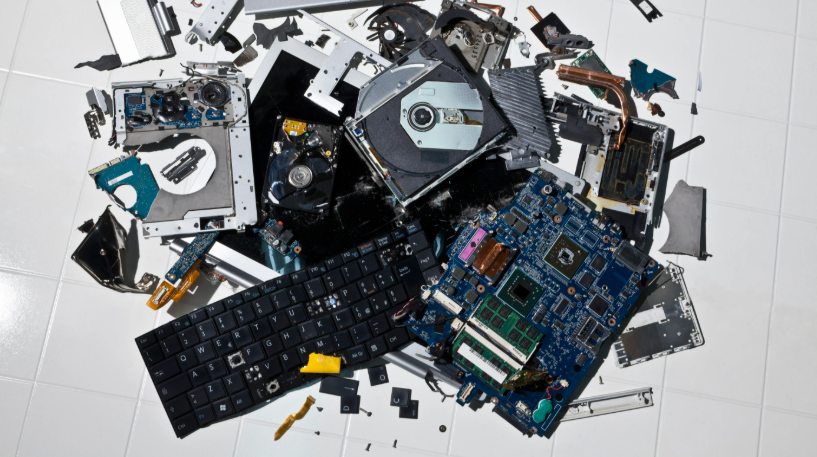
Most people only think about where their old technology goes when a closet finally runs out of room. A dead laptop, a cracked tablet, two generations of routers, a monitor that was replaced years ago: these things accumulate quietly until a move, a renovation, or a spring cleaning forces a decision. At that moment, the question shifts from “should I keep this?” to something more practical, which is where any of it can actually go.
The instinct for most households and small businesses is to look for the nearest drop-off point and be done with it. That is a reasonable starting place, but it skips over a question that matters more than convenience. Not every collection point handles material the same way, and the sticker on the door does not always tell you what happens after your device leaves the counter. Some collectors process material domestically under audited conditions. Others act as brokers, consolidating volume and shipping it onward with limited visibility into the final destination.
This is why it helps to slow down for a few minutes before loading the car. Local recycling searches will usually return a mix of municipal depots, retail take-back programs, charity collection drives, and certified processors, and those four categories operate under very different standards. Knowing which one you are dealing with changes what you should expect in terms of data handling, environmental reporting, and whether any of the material genuinely gets recovered.
Understanding the Different Types of Collection Points
Municipal depots are typically the most accessible option. They are funded through regional waste programs, they accept a defined list of items, and they generally send material to a contracted downstream processor. They are good for bulky, low-risk items like old televisions or printers. They are usually not the right choice for anything containing sensitive information, because the drop-off is unsupervised and the chain of custody effectively begins after you have already left.
Retail take-back programs are convenient and often tied to a trade-in credit. The trade-off is that the retailer’s priority is resale value, not necessarily environmental processing. Devices in good condition tend to be refurbished and resold, which is genuinely a good outcome. Devices that fail inspection follow a less visible path.
Charity drives and community collection events sit somewhere in between. They serve a real purpose and can put working equipment back into use, but the volunteers running them are rarely equipped to verify what happens to the material that cannot be reused.
Certified processors are the most rigorous option. They operate under recognized standards, maintain documented handling procedures, and can usually provide reporting on what was recovered. For anything sensitive or anything in volume, this is the category worth seeking out.
Questions That Reveal How Serious a Facility Is
A short conversation tells you a great deal. Ask whether the facility processes material itself or passes it to a third party. Ask whether they hold recognized industry certifications and whether those certifications are current. Ask what percentage of incoming material is diverted from landfill, and whether they can put that in writing.
Ask what happens to devices containing storage media. A serious operator will have a specific answer involving either verified data erasure or physical destruction, with documentation. A vague answer about “wiping everything” is a warning sign.
Finally, ask about export. Material shipped overseas for informal processing is the source of most of the environmental harm associated with electronic waste, and a reputable facility will be direct about where material ends up.
Preparing Devices Before You Hand Them Over
There are a few steps worth taking regardless of where you drop material off. Sign out of accounts and deauthorize devices from any services tied to them, because a factory reset does not always release a device from account locks. Remove memory cards, SIM cards, and any external storage that may have been left plugged in.
Separate batteries where the design allows it. Lithium cells are the leading cause of fires in waste handling facilities and in collection trucks, and a swollen or damaged battery should be flagged to staff rather than buried inside a box of cables.
Keep power adapters with their devices. Matching accessories meaningfully improve the odds that a working unit gets refurbished rather than dismantled.
Why Business Volumes Change the Calculation Entirely
An individual dropping off a single laptop is making a modest environmental decision. An organization retiring fifty workstations is making a legal one. Business equipment routinely contains customer records, financial data, employee information, and licensed software, and the obligations attached to that material do not disappear when the hardware is decommissioned.
Volume also changes logistics. Once you are dealing with pallets rather than boxes, on-site pickup, asset tagging, weight-based reporting, and a documented handover become worth arranging in advance. Many facilities that accept consumer drop-offs are not set up for that scale, which is why organizations tend to work directly with a processor rather than through a public depot.
See also: The Security Challenges Every Hybrid Business Needs To Think About
Making the Decision Once Instead of Every Time
The most useful outcome of researching this properly is that you only need to do it once. Identify a facility that meets your standards, confirm what they accept, and then treat it as the default destination for everything that comes out of service afterward. That removes the friction that causes old devices to sit in drawers and storage rooms for years.
Old technology is not really waste. It is a dense collection of recoverable metals, reusable components, and, in many cases, working equipment that someone else could use. What determines which of those outcomes it reaches is almost entirely the decision made in the ten minutes before it leaves your hands. Spending a little of that time on research, rather than defaulting to the closest bin, is what turns a cleanout into something genuinely worthwhile.