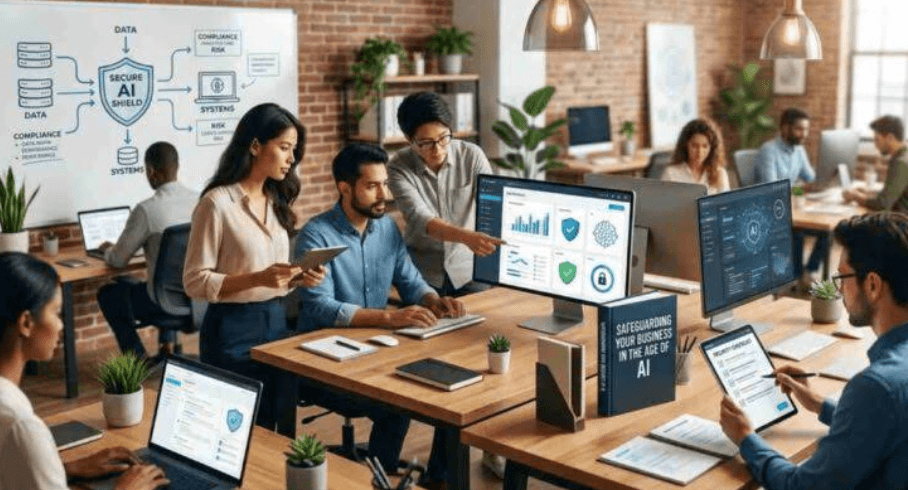
Hybrid working has given businesses a lot more flexibility. Employees can work from home, head into the office, travel between locations, and access the tools they need from almost anywhere. That freedom is great for productivity, but it also creates a much more complicated security picture.
When everyone worked from the same office network, businesses had clearer boundaries to protect. Now, those boundaries are much harder to define. Here are some of the biggest security challenges every hybrid business needs to keep on its radar.
Protecting Employees Outside the Office
One of the biggest changes with hybrid working is that employees are regularly connecting from networks the business does not control. Home Wi-Fi, hotels, airports, coffee shops, and coworking spaces can all introduce additional risks.
Businesses need to think beyond simply protecting the office network. Security should follow employees wherever they work, with strong authentication, secure connections, and sensible access controls in place.
Managing Access to Cloud Applications
Most hybrid businesses now rely heavily on cloud-based tools, from email and file storage to project management and customer relationship management systems.
The challenge is making sure employees can access what they need without giving everyone unnecessary permissions. Poorly managed access can leave sensitive information exposed if an account is compromised.
This is one reason businesses are increasingly looking at approaches such as SASE security, which can bring networking and security capabilities together to help protect users accessing company resources from different locations.
Keeping Personal Devices Under Control
Hybrid working can blur the line between personal and company technology. Employees may check work emails on personal phones, download files to home computers, or use devices that have not been configured by the IT team.
That does not necessarily mean personal devices need to be banned. However, businesses should have clear policies covering which devices can access company information, what security protections they need, and how sensitive data should be handled.
Dealing With More Login Credentials
The more tools a business uses, the more login details employees have to manage. Weak passwords, reused passwords, and stolen credentials can quickly become major security problems.
Multi-factor authentication can significantly strengthen account security, while single sign-on can reduce the number of passwords employees need to remember. Businesses should also have a clear process for removing access when someone leaves the company or changes roles.
See also: Why Hydraulic Piston Pump Technology Matters in Modern Industrial Applications
Spotting Threats Across a Wider Environment
A hybrid workplace generates activity across laptops, cloud services, mobile devices, home networks, and office infrastructure. That can make suspicious behavior much harder to spot.
Security teams need enough visibility to understand what is happening across the entire environment. Centralized monitoring and automated threat detection can help identify unusual activity before it develops into something more serious.
Keeping Employees Security-Aware
Technology can only solve part of the problem. Employees still need to recognize phishing emails, suspicious login requests, unusual file-sharing links, and other common threats.
Regular security training should reflect how people actually work in a hybrid environment rather than focusing only on traditional office-based risks.
Hybrid working is unlikely to disappear, so security strategies need to evolve with it. Businesses that focus on protecting users, controlling access, improving visibility, and making security part of everyday working habits can enjoy the flexibility of hybrid work without creating unnecessary risk.